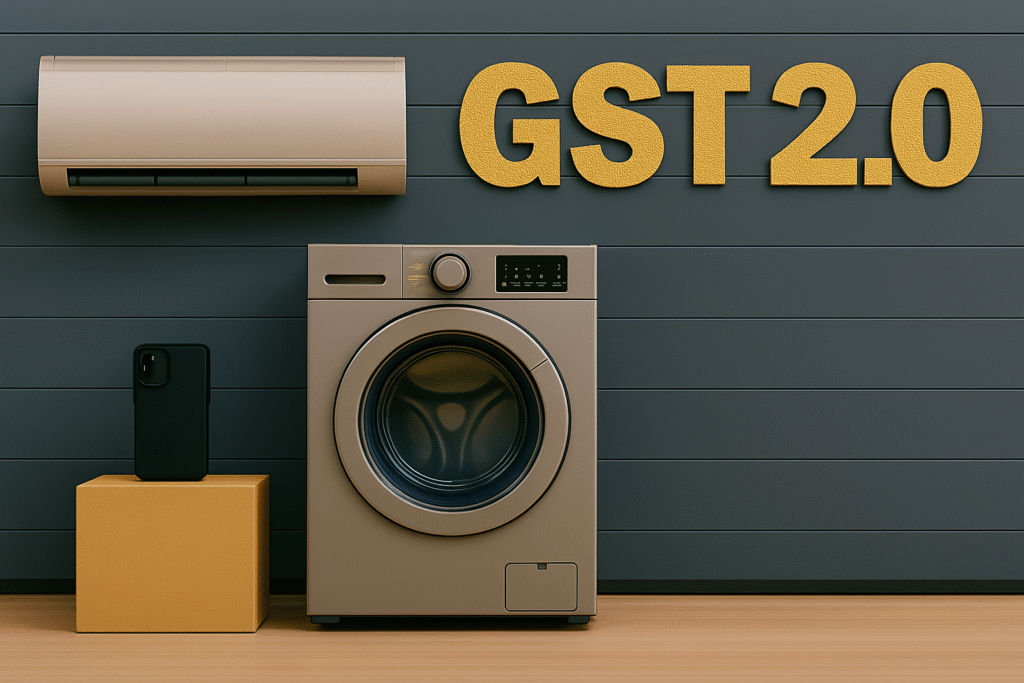
While India gets prepared for the second phase of Goods and Services Tax (GST) reform, online shoppers are holding off on making large purchases in hopes of lower prices. Industry analysts have picked up a strong “wait and watch” pattern in categories like mobiles, air conditioners, and electronic goods.
The existing GST is levied under four slabs at 5%, 12%, 18%, and 28%. The government has recommended replacing this with a two-rate system of 5% and 18%, and a 40% cess on sin and luxury items. The GST Council will meet on September 3rd and 4th to consider the same.
Upon implementation, this would bring down the price of many consumer items. Electronics such as air conditioners and mobiles, which are taxed at 28% today, could shift to 18%, cutting prices by as much as 10%. The potential for lower rates is influencing the purchases of many, especially for premium electronics.
E-commerce companies are also seeing demand slacken. As a festive season surge is anticipated, platforms are collaborating with brands to supply the needs of consumers. Once the new tax regime is announced, industry estimates indicate a 15-20% increase in festive e-commerce sales.
But accommodating those adjustments isn’t always simple. Retailers are having trouble with uncertainty over billing and compliance in the transition. Inventory planning has been difficult, especially with high-value products, as platforms weigh price expectations against current stock levels.
Despite the initial caution in the short term, the outlook is optimistic. The analysts view GST 2.0 as a structural change that will enhance affordability, simplify compliance, and boost consumer confidence. Combined with India’s cultural tendency for festive shopping, the changes could mark a strong consumption boost later this year.